
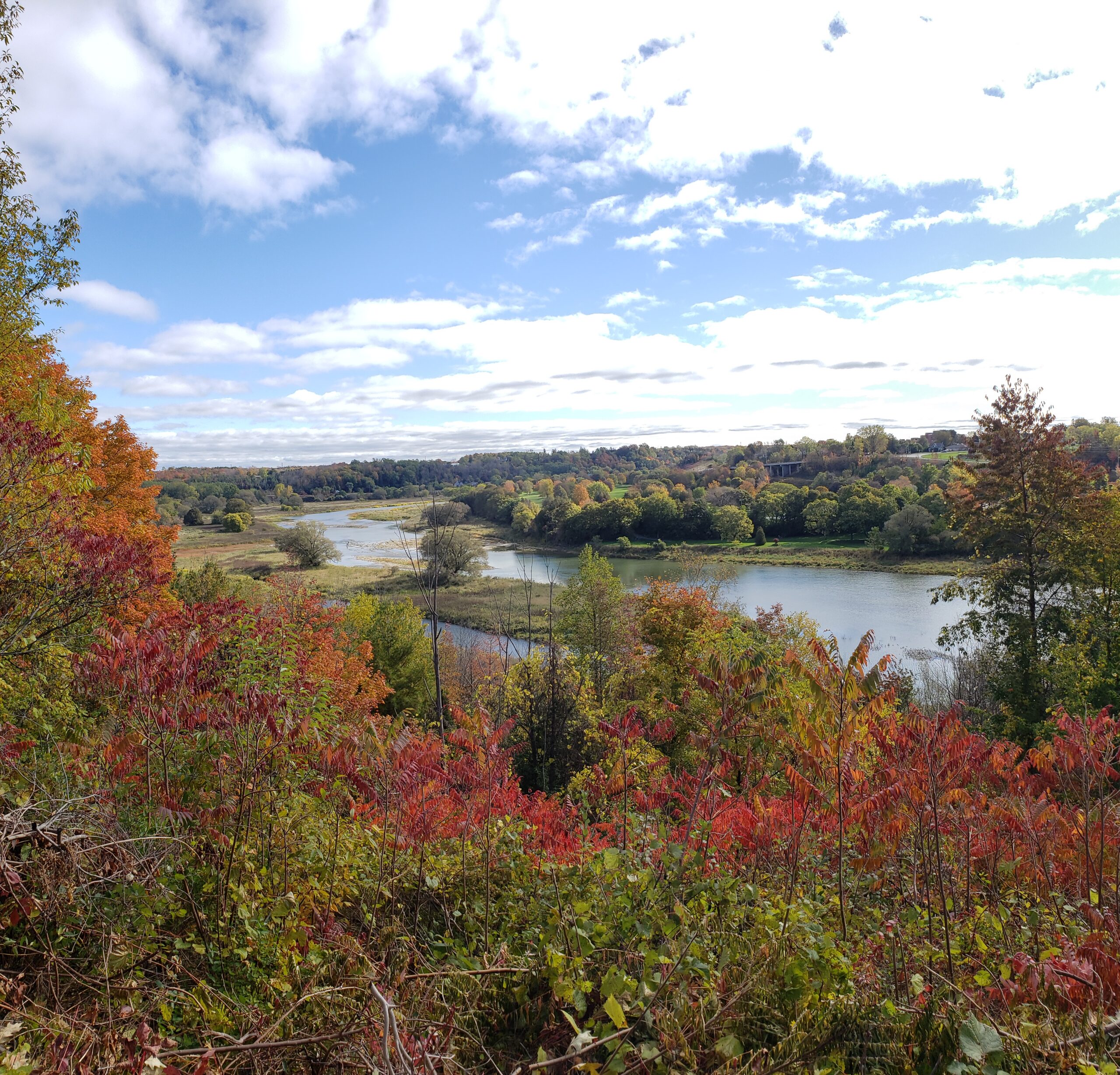
Happy first day of fall! As the autumn equinox officially arrives, there’s a shift in the air across the coast of Lake Huron. While seasonal shifts happen everywhere, experiencing the turn right here where the Maitland River meets the shoreline brings a unique dynamic to autumn.
Whether you’re strolling along the coastal bluffs, visiting the river flats, or hiking on woodland trails, here is what to keep your eyes tuned for as the new season settles in.
1. Thermal Buffer Effect & Canopy Shifts
If you’ve noticed the leaves aren’t changing colours quite as fast as it is further inland, you aren’t imagining things! Lake Huron holds onto its accumulated summer warmth well into October, creating a gentle coastal microclimate that delays hard frosts and extends our fall colours.
What to look for among local trees:
- Sugar & Red Maples: As days shorten, an abscission layer forms at the base of leaf stems, sealing off water flow and allowing chlorophyll to break down. Look for sugar maples shifting from bright yellow to orange, while red maples turn scarlet red!
- American Beech & Red Oak: Late in the season, beech leaves transition to a golden-copper and display marcescence meaning they keep their dry, rustling leaves well into winter. Red oaks will be turning a deep russet red, dropping acorns that feed local wildlife before snow arrives.
- Spotting Common Buckthorn: Pay attention to trail edges! Invasive buckthorn stays dark green long after our native maples and oaks drop their leaves, making early autumn the best time to spot and manage it.
2. Late-Season Blooms: Asters & Goldenrods
Along sunny bluff tops, open trail edges, and damp river flats, autumn brings a spectacular finale of native colour. Asters and goldenrods dominate the autumn landscape, providing critical nectar for migrating Monarch butterflies and native bees before winter sets in.
What to look for:
- Asters (Symphyotrichum species): In sunny fields, by open trails, and on river flats,keep an eye out for the asters that change colour. Their centres shift from yellow to a deep pinkish-purple once pollinated, telling pollinators to skip the flower! Some species that have this remarkable trait are heart-leaved asters, calico asters and fringed blue asters.
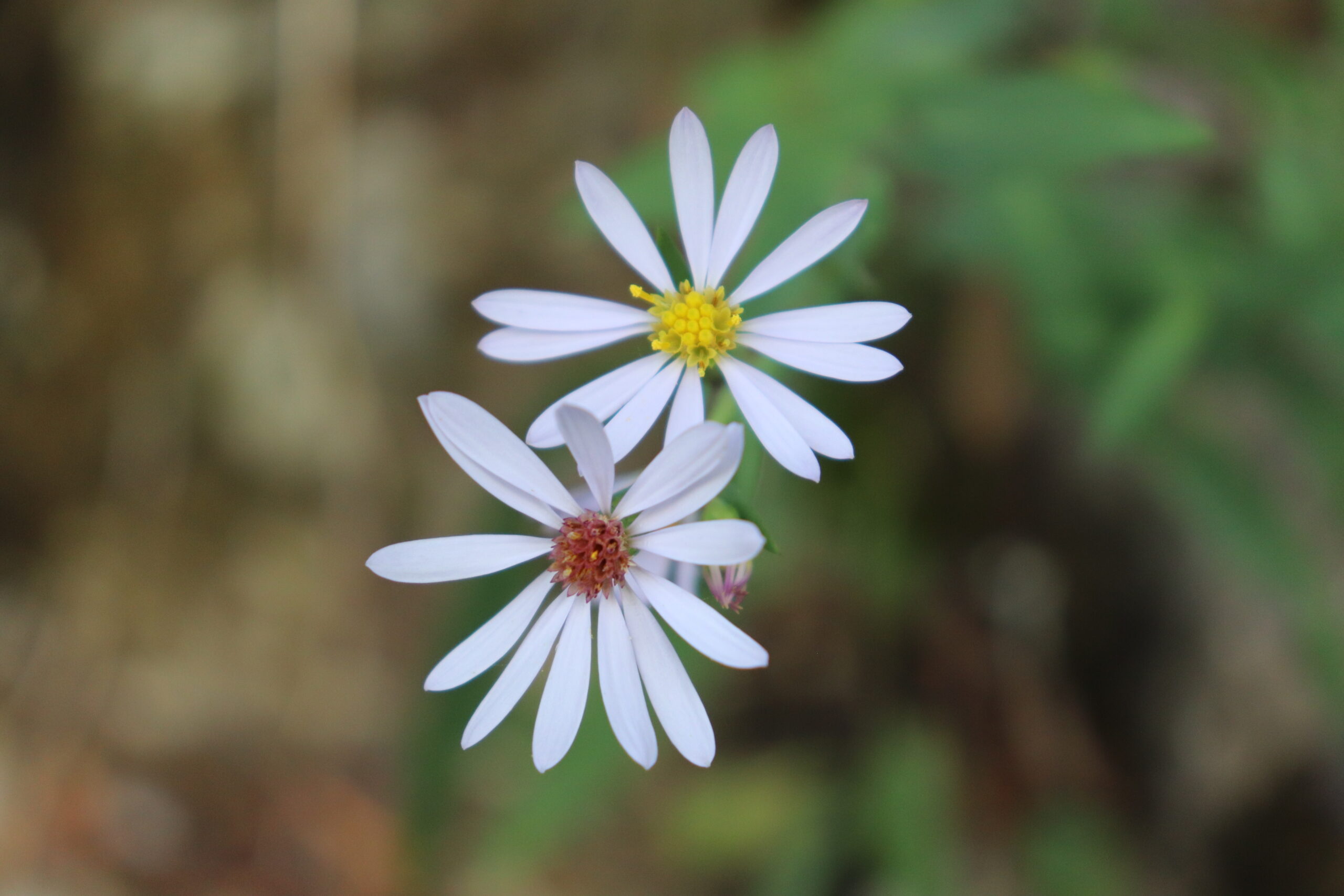
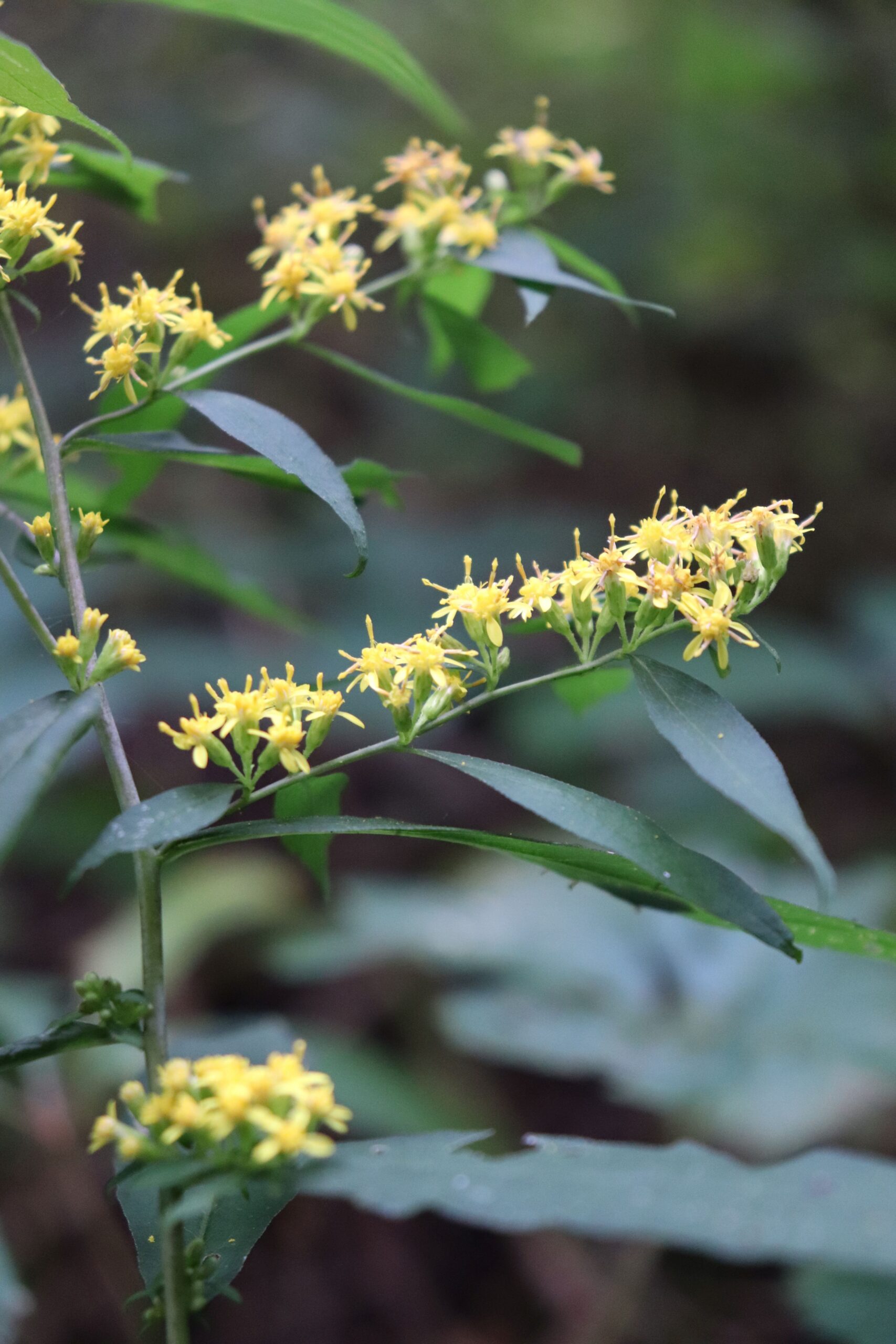
Smooth Blue Aster (Symphyotrichum laeve) before and after pollination by Sheldon Paul - Goldenrods (Solidago species): While feathery Canada Goldenrod lights up open fields along the bluffs, step into the shade of the river valley to spot Zigzag and Bluestem Goldenrods. Their bright yellow blossoms cascade down their stems in dappled woodland light!
3. Microclimates & Frost Pockets in the River Valleys
Even with the lake keeping the coast mild, our dramatic valley topography creates its own magic. On clear, crisp autumn nights, heavy cold air comes down from higher ground and settles at the bottom of the Maitland River valley.
What to look for: Early morning ground frost clinging to the river flats and valley floor grass, even when the top of the bluffs remain frost-free. If you’re out on the trails early, watch for mist rising off the warmer river water into the chilly morning air.
4. The Autumn Fungal Flush
Autumn rains combined with high humidity in our sheltered river valleys create the ultimate habitat for the fungal kingdom. Decaying hardwoods and damp mossy banks along trail edges are bursting with seasonal fungi.
What to look for:
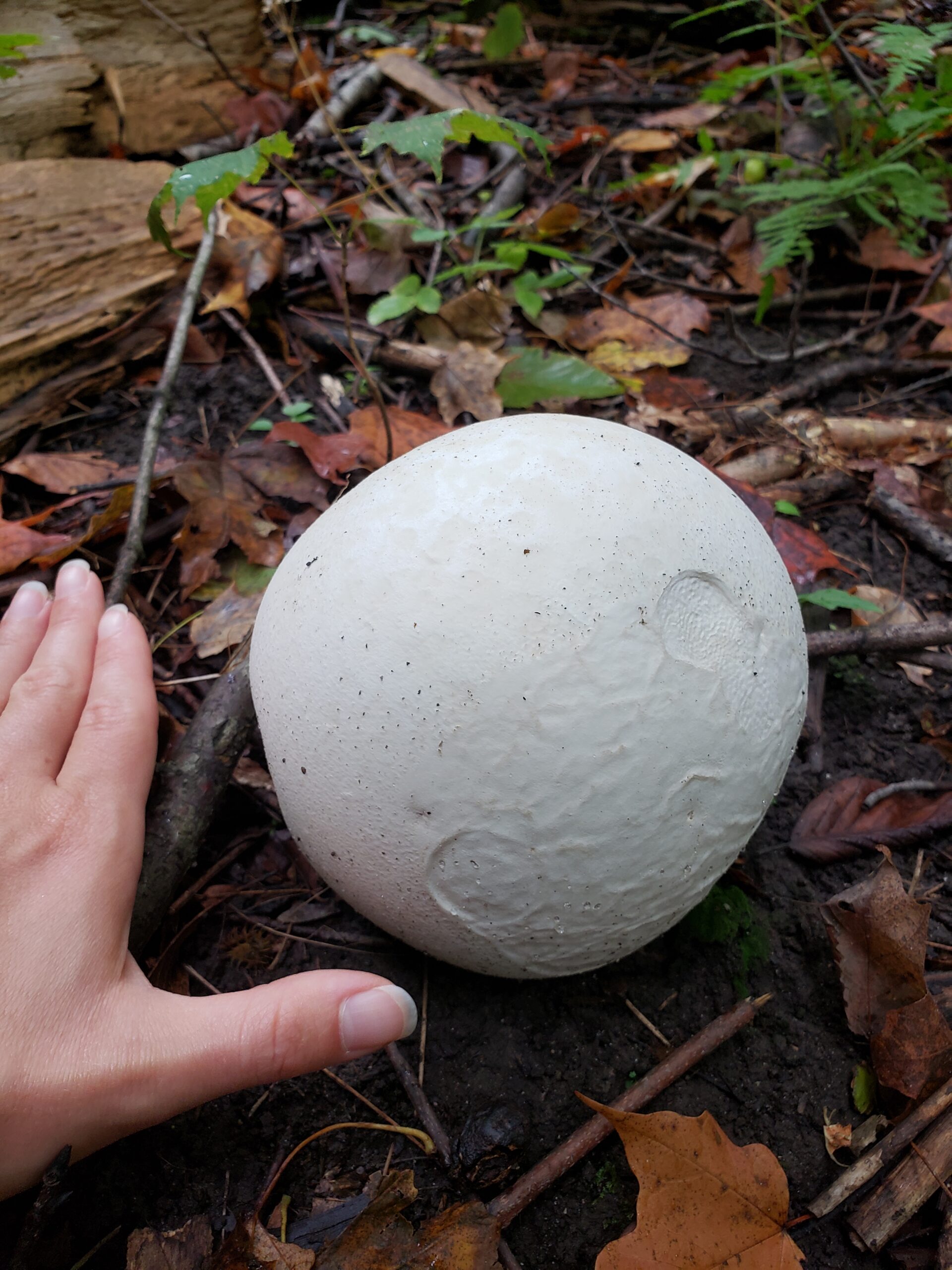
- Giant Puffballs (Calvatia gigantea): Keep an eye on grassy clearings, open hardwood gaps, and trail edges. These smooth, bright white spheres pop up almost overnight after a good rain, and can range in size from a softball to a soccer ball!
- Honeycomb Polypores (Neofavolus alveolaris): Scan fallen sugar maple and beech branches lying along the trail. This bracket fungus has an orange-brown, kidney-shaped cap. But its colour isn’t the most striking feature, its unique honeycomb patterned pores on the underside is!
- Bear’s Head Tooth (Hericium coralloides): Check along decaying hardwood logs and standing dead trees and you won’t miss this fungus! This bright white fungus produces bunches of long icicle-like spindles!
5. Reptiles Prepping for Brumation
Our local reptiles are paying close attention to the dropping evening temperatures. Unlike mammals, reptiles enter brumation—similar to a deep ‘sleep’—to survive the winter months. Because our coastal waters stay slightly milder, reptiles in local tributaries stay active just a little bit longer before settling in for the season!
What to look for:
- Snakes Heading to the Banks: Snakes like the Garter variety are starting their seasonal movement toward underground hibernacula. They seek out deep rock fissures, clay bank crevices, and old burrows that extend safely below the frost line.
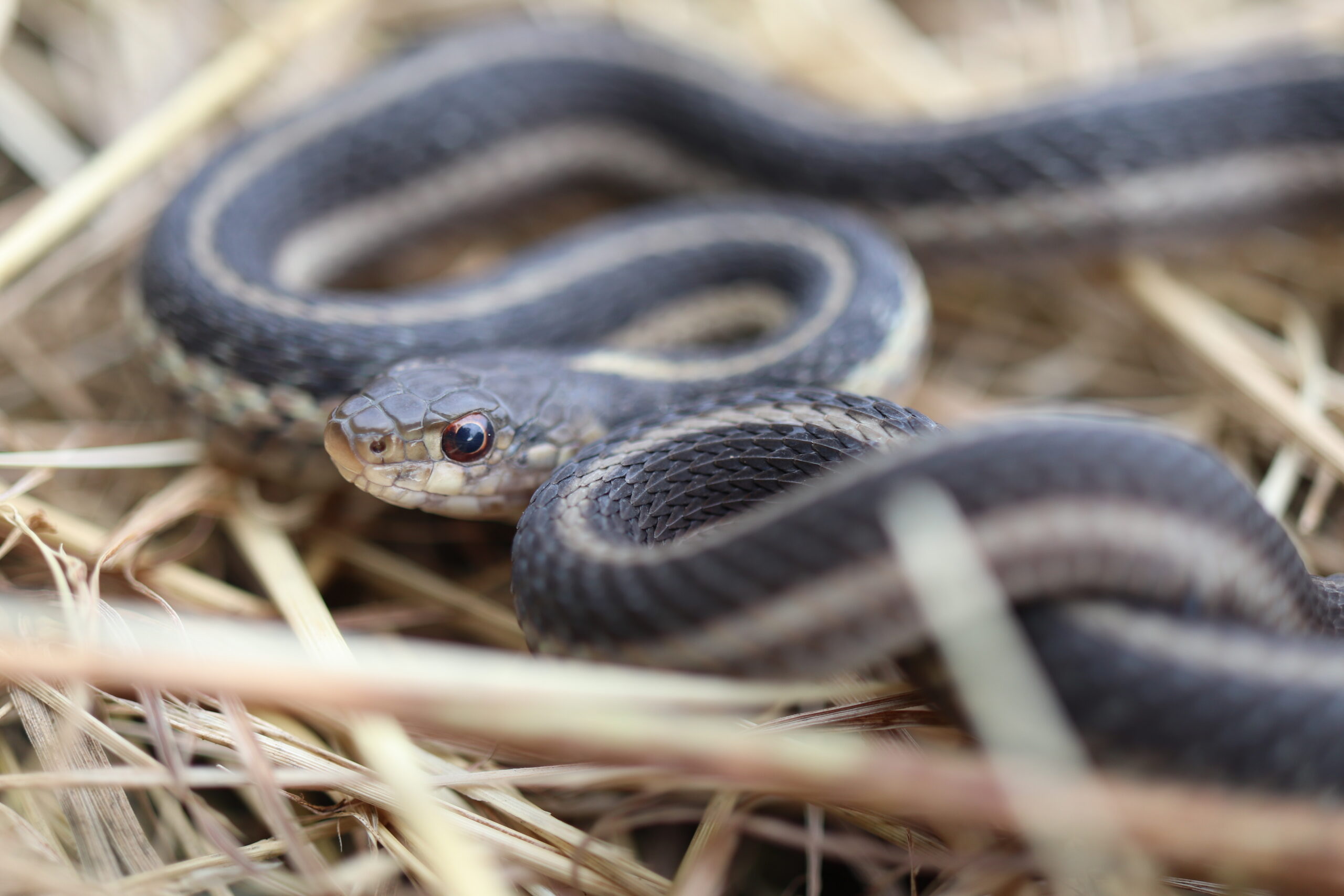
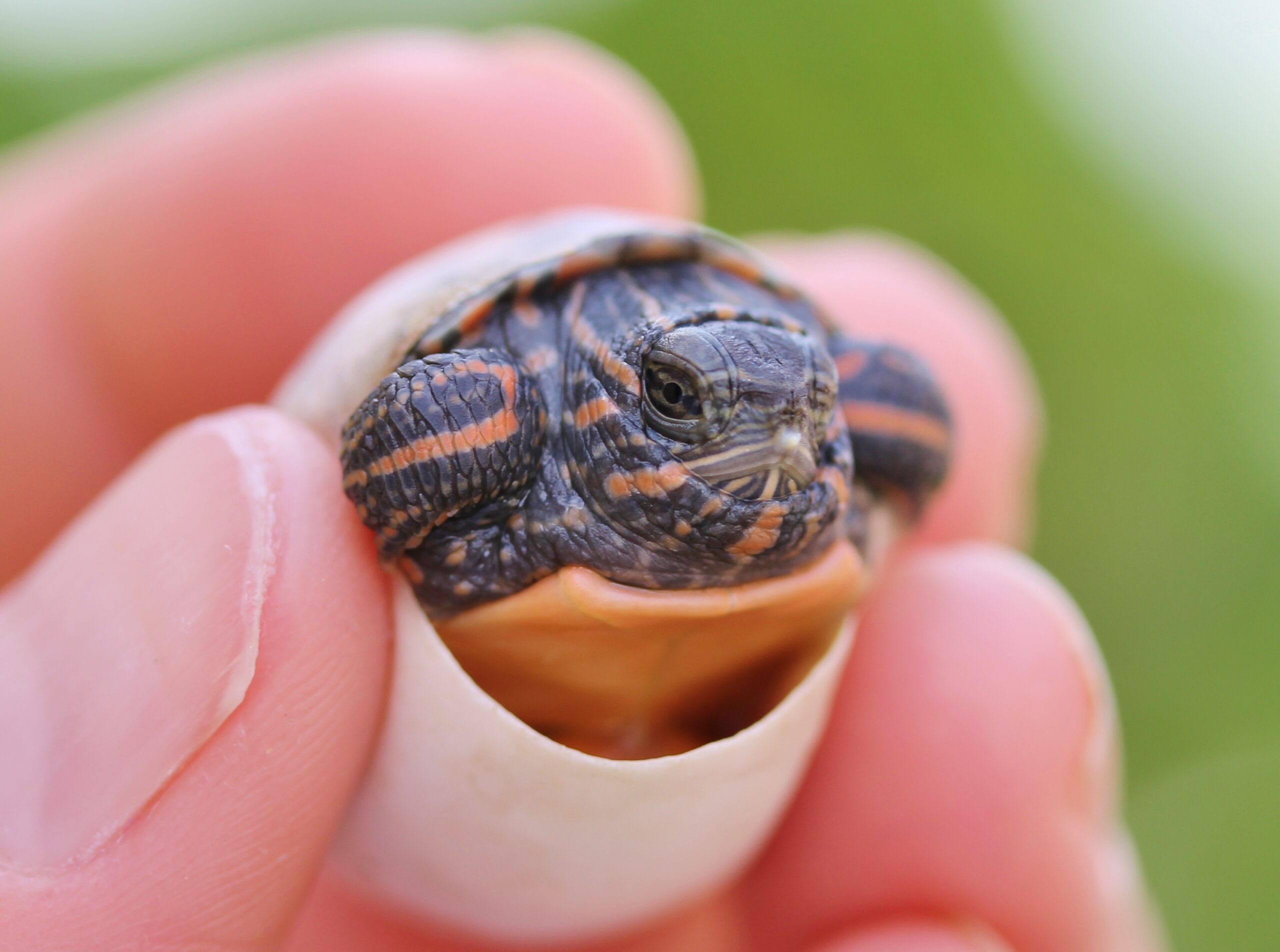
Eastern Garter Snake (Thamnophis sirtalis) by Sheldon Paul - Turtles Sinking into the Benthic Zone: Freshwater turtles in local wetlands and river stretches are beginning to move into the water, looking for deep, oxygenated mud or under submerged logs where water stays a stable 4°C all winter long.
Fun Fact: While some painted turtle hatchlings emerge from their nests in late-summer, many hatch underground in early autumn and choose to stay inside the nest cavity until spring. To survive the extremes of winter, they use a process called supercooling, this means their bodies can drop to temperatures as low as -12 °C without their body fluids freezing.
They are able to do this because their bodies don’t have any “ice nucleating agents”, which are particles that ice crystals form around (Turtle Guardians, 2020).
Your First Day of Fall Challenge: Head down toward the water or into the woods, and take five minutes to just observe. Notice all the small, yet intricate processes happening around you as the colder months approach. Look at the plants changing and fungi breaking through the soil, and listen for the rustling of leaves in the fall wind. Let’s enjoy the start of this incredible transition!
Reference:
Turtle Guardians. (2020). “So guys…should we stay in or go out?” A painted turtle hatchling dilemma. https://www.turtleguardians.com/wp-content/uploads/2020/01/Do-we-go-out-or-stay-in-blog-post.-Overwintering-hatchlings.pdf