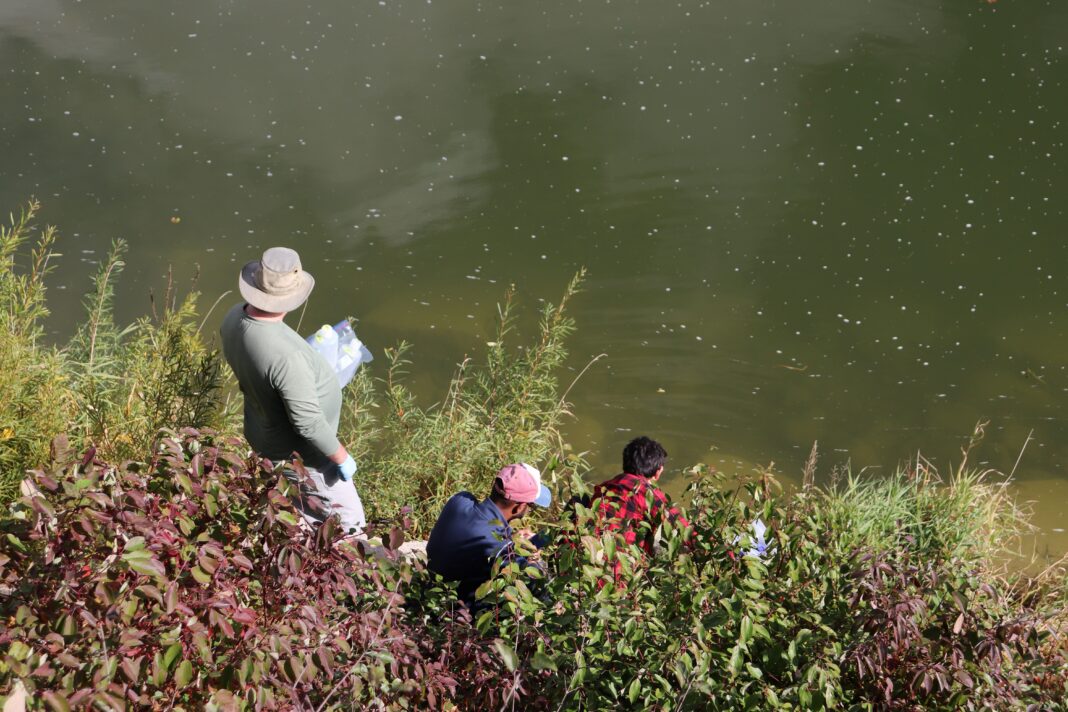
Did you know we can detect unobserved wildlife through water samples? Our team recently assisted Queen’s University researchers with collecting water samples for environmental DNA (eDNA) testing along a 40 km stretch the Maitland River! This fieldwork was designed to detect and identify locations where species-at-risk are living within the watershed, helping bridge field ecology and molecular science to support local conservation efforts.
What is eDNA?
Environmental DNA, or eDNA, is revolutionizing how we monitor aquatic and terrestrial ecosystems. Every organism constantly sheds microscopic traces of genetic material into its surroundings through skin cells, mucus, and feces.
By collecting a simple water sample and extracting this genetic signature, researchers can detect which species are present in an ecosystem without ever needing to visually spot or capture them. The intent is to combine field observations with eDNA detections to better understand the distribution of species-at-risk in the watershed.
How eDNA Sampling Works in the Field
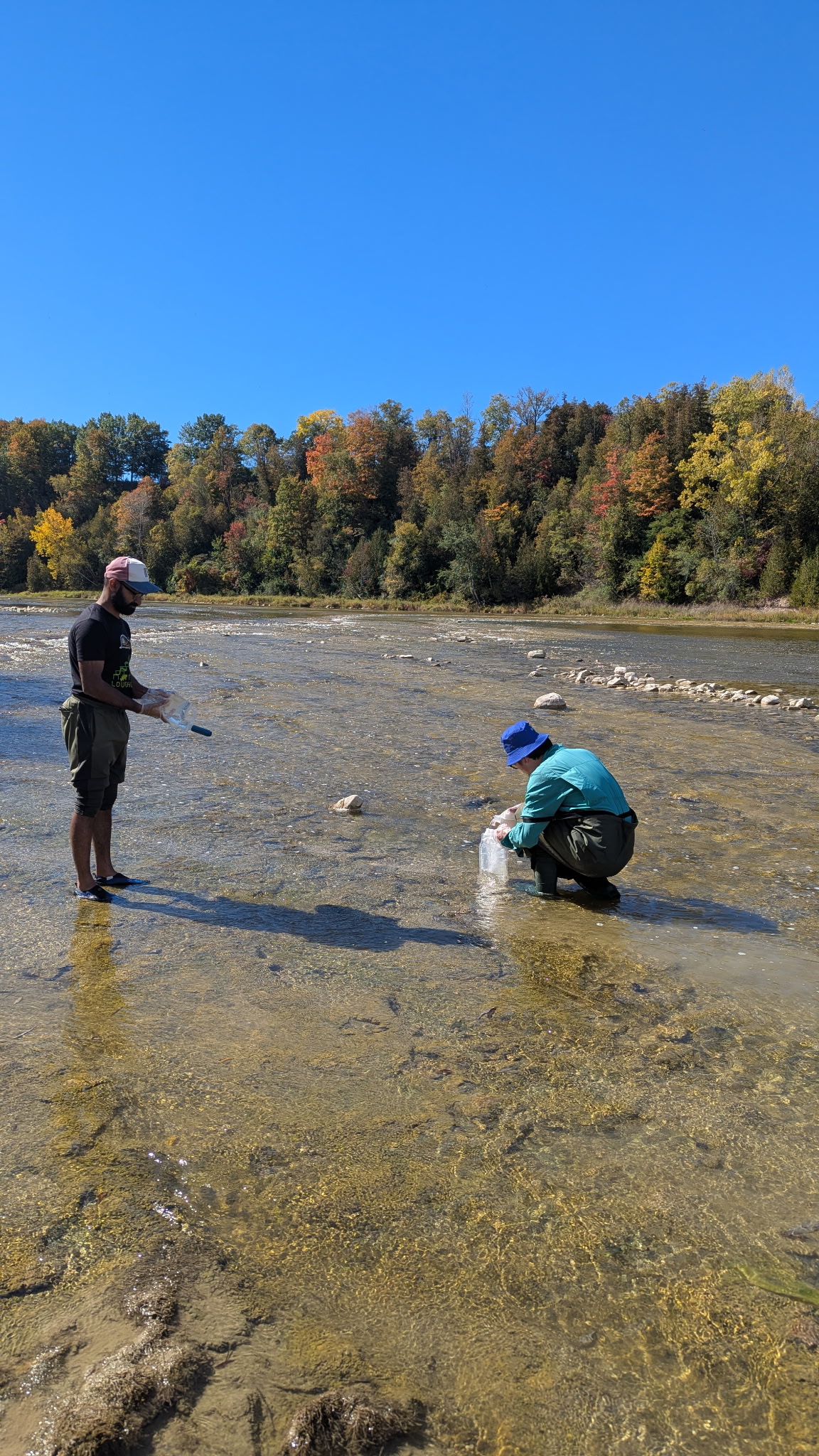
Field protocols require rigorous methodology to prevent cross-contamination and ensure accurate results. Here is the standard workflow used by field technicians:
- Site Selection: Identify target waterbodies, rivers, and streams based on species habitat preferences and historic observations.
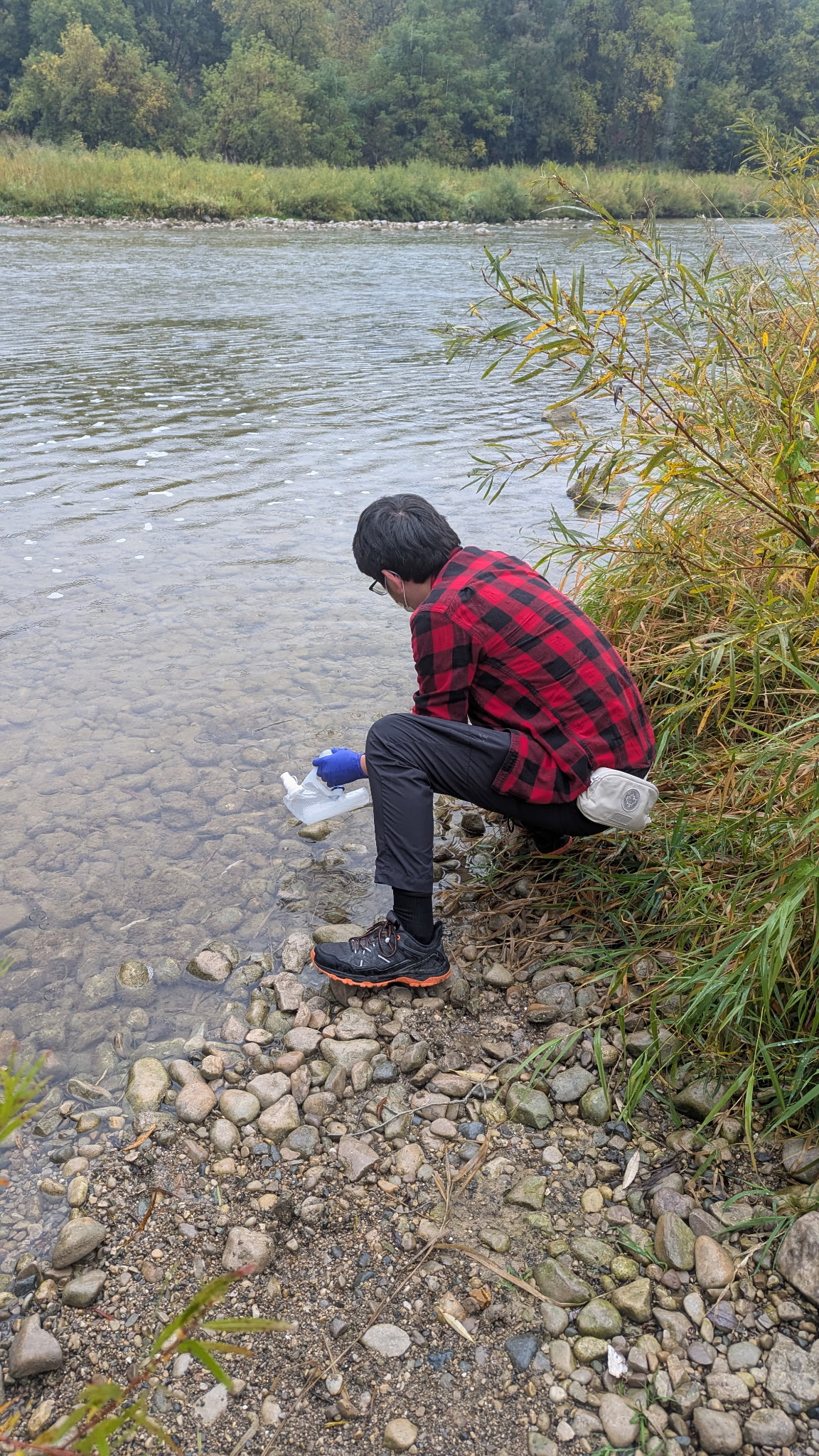
- Sample Collection: Using sterile equipment, water samples are collected from multiple points across a site. Technicians wear clean gloves and change them between sites to eliminate false positives.
- Preservation: Filters are placed in vials with a lysis buffer in the field to preserve DNA integrity before laboratory analysis.
- Filtration: Water is pumped through specialized membrane filters, which trap the cellular debris containing the eDNA.
- Laboratory Analysis: Samples undergo DNA extraction followed by quantitative PCR for targeted detection of the species.
Applications in Conservation
eDNA provides critical data for conservation biology and resource management:
- Cryptic and Rare Species Detection: Endangered/rare species can go unnoticed due to low population numbers across a large survey area. As well, cryptic species spend most of their time hidden making visual surveys difficult. With eDNA analysis, they can instead be detected via water shedding, uncovering their presence.
- Early Detection of Non-Native Species: Catching invasive aquatic species or pathogens at very low population densities allows for rapid containment before populations spread.
- Non-Invasive Monitoring: Reduces disturbance to wildlife compared to traditional surveying such as capture and tagging.
- Biodiversity Baseline Mapping: Establishes comprehensive community profiles to monitor ecosystem health over time, assess habitat restoration success, and inform regional vegetation and watershed management plans.
As environmental DNA continues to assist field observations to bridge the gap between field ecology and advanced molecular science, projects like this along the Maitland River demonstrate the power of local stewardship in action. By turning a simple water sample into a comprehensive roadmap of biodiversity, researchers and community partners can make informed, data-driven decisions to protect vulnerable species-at-risk and preserve the health of our local watersheds for generations to come.